Dr. Elizabeth Vance, PsyD, LCSW
🛡️ Verified ClinicianLicensed Clinical Psychologist & Psychotherapist
Dr. Vance is a licensed clinical psychologist and somatic therapy pioneer with over 14 years of clinical outpatient experience. She specializes in cognitive behavioral therapy (CBT), somatic down-regulation techniques, and values-based emotional regulation frameworks.
Types of anxiety disorders represent some of the most prevalent, complex, and frequently misunderstood mental health conditions affecting millions of people worldwide. Anxiety is a natural and evolutionarily necessary human experience.
In its healthy form, it sharpens attention, motivates action, and protects us from genuine danger. However, when fear responses become persistent, disproportionate, and functionally impairing, what was once a protective mechanism transforms into a clinical disorder that significantly diminishes quality of life, relational functioning, and psychological wellbeing.
Understanding the different types of anxiety disorders with clinical accuracy is the essential first step toward early recognition, accurate diagnosis, and effective, evidence-based treatment.
In this comprehensive guide, we explore each major anxiety disorder type, its defining characteristics, neurobiological underpinnings, and the most effective therapeutic approaches currently available.
 Anxiety Disorders" title="Understanding The Different Types Of Anxiety Disorders 2">
Why Understanding Types of Anxiety Disorders Matters
Anxiety disorders are not a single, monolithic condition. They represent a diverse family of related but clinically distinct presentations, each with unique symptom profiles, triggering mechanisms, maintaining factors, and optimal treatment approaches. Treating all types of anxiety disorders identically would be as imprecise as treating all cardiovascular conditions with the same medication regardless of diagnosis.
Despite their prevalence, anxiety disorders are frequently underdiagnosed, misdiagnosed, or attributed to personality traits rather than recognized as genuine neurobiological conditions requiring professional clinical intervention.
Accurate understanding of the specific types of anxiety disorders dismantles this barrier and empowers individuals to seek the targeted support they deserve.
The Neurobiological Foundation of Anxiety Disorders
All types of anxiety disorders share a common neurobiological thread: dysregulation of the brain’s threat-detection and stress-response systems. The amygdala, the brain’s primary emotional threat-processing center, plays a central role across all anxiety presentations. In individuals with anxiety disorders, the amygdala demonstrates heightened reactivity, firing alarm signals in response to stimuli that do not represent genuine danger.
Additionally, disruptions in the prefrontal cortex’s regulatory influence over the amygdala, imbalances in neurotransmitter systems including serotonin, GABA, glutamate, and norepinephrine, and alterations in the HPA axis stress response all contribute to the maintenance of different types of anxiety disorders. Understanding this shared neurobiology helps explain why certain medications and therapeutic approaches produce benefits across multiple anxiety disorder types.
The 8 Primary Types of Anxiety Disorders
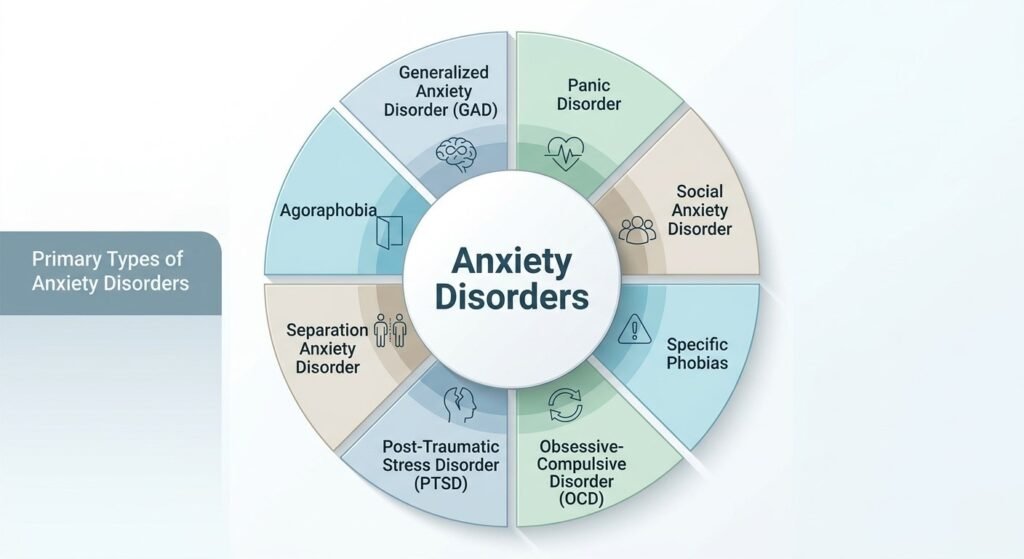
1. Generalized Anxiety Disorder (GAD)
Generalized Anxiety Disorder is perhaps the most pervasive of all types of anxiety disorders, characterized by chronic, excessive, and largely uncontrollable worry that spans multiple life domains simultaneously rather than focusing on a single specific concern.
Defining Features:
Individuals with GAD experience persistent worry about everyday concerns including work performance, financial stability, health, family wellbeing, and global events. The worry is experienced as difficult or impossible to control and is accompanied by a constellation of physical and cognitive symptoms that produce significant functional impairment.
Core diagnostic symptoms include:
- Chronic, excessive worry occurring more days than not for at least six months
- Significant difficulty controlling the worry process
- Physical restlessness or feeling keyed up and on edge
- Fatigue that does not resolve with rest
- Concentration difficulties and mind going blank
- Irritability and emotional dysregulation
- Muscle tension, particularly in the neck, shoulders, and jaw
- Persistent sleep disturbance including difficulty falling or staying asleep
Neurobiological Profile:
GAD is associated with hyperactivation of the prefrontal cortex’s verbal-linguistic processing regions, which generates the characteristic repetitive worry narratives. Simultaneously, amygdala regulation is compromised, preventing effective dampening of threat signals once activated. This creates the exhausting experience of worry that never fully resolves.
Evidence-Based Treatment:
- Cognitive Behavioral Therapy (CBT): Directly addresses the cognitive distortions, intolerance of uncertainty, and avoidance behaviors maintaining GAD
- Acceptance and Commitment Therapy (ACT): Builds psychological flexibility and reduces experiential avoidance of anxious experience
- Mindfulness-Based Cognitive Therapy (MBCT): Reduces rumination and worry through present-moment awareness training
- Medications: SSRIs (sertraline, escitalopram), SNRIs (venlafaxine, duloxetine), and buspirone are first-line pharmacological options
This YouTube video below by Osmosis from Elsevier explains the causes and symptoms of generalized anxiety disorder. It breaks down how GAD affects thoughts, behavior, and the nervous system. These insights provide helpful clinical context for this discussion.
2. Panic Disorder
Among the types of anxiety disorders, Panic Disorder is perhaps the most acutely distressing in its moment-to-moment experience. It is characterized by recurrent, unexpected panic attacks accompanied by persistent concern about future attacks and their consequences.
Defining Features:
A panic attack is a sudden surge of intense fear or discomfort that peaks within minutes and includes a specific cluster of physical and cognitive symptoms. The experience is frequently described as one of the most terrifying sensations a person can have, often mistaken for a heart attack or neurological emergency.
Panic attack symptoms include:
- Racing or pounding heart (palpitations)
- Chest pain or tightness
- Shortness of breath or feeling smothered
- Dizziness, lightheadedness, or feeling faint
- Trembling or shaking
- Sweating
- Nausea or gastrointestinal distress
- Numbness or tingling sensations
- Chills or hot flashes
- Derealization (feeling detached from reality) or depersonalization
- Fear of losing control or going crazy
- Fear of dying
The Panic Cycle:
What transforms occasional panic attacks into Panic Disorder is the development of anticipatory anxiety, persistent worry about when the next attack will occur, and agoraphobic avoidance, the progressive restriction of activities, locations, and situations associated with previous attacks or perceived inability to escape if an attack occurred.
Evidence-Based Treatment:
- Cognitive Behavioral Therapy with interoceptive exposure (deliberate induction of physical panic sensations to reduce fear of symptoms)
- Exposure and Response Prevention targeting avoidance behaviors
- Medications: SSRIs and SNRIs as first-line agents, with short-term benzodiazepines used cautiously in acute phases
3. Social Anxiety Disorder
Social Anxiety Disorder (SAD), formerly called social phobia, is one of the most functionally impairing types of anxiety disorders because it strikes at the core of human experience: connection, belonging, and social participation.
Defining Features:
Social Anxiety Disorder involves an intense, persistent fear of social or performance situations in which the person fears they will be negatively evaluated, humiliated, embarrassed, or rejected by others. The fear is disproportionate to the actual social situation and produces significant distress or functional impairment.
Commonly feared situations include:
- Meeting new people or initiating conversations
- Speaking in public or in meetings
- Eating or drinking in front of others
- Being observed while working or performing tasks
- Attending social gatherings or parties
- Asserting oneself or disagreeing with others
- Using public restrooms or making phone calls
Physical symptoms in feared social situations:
Blushing, trembling, sweating, nausea, voice trembling, and mind going blank are common physical manifestations that often become secondary sources of anxiety because the person fears others will notice these reactions.
Evidence-Based Treatment:
- CBT with exposure therapy: Systematic, gradual approach to feared social situations with cognitive restructuring of negative social predictions
- Group therapy: Provides a structured therapeutic social environment that itself functions as graduated exposure
- Medications: SSRIs (particularly paroxetine and sertraline), SNRIs, and beta-blockers for situational performance anxiety
This YouTube video below by Doctor Ali Mattu explains social anxiety disorder in simple terms. He uses relatable examples to describe common fears and thought patterns. These insights help readers better understand the condition.
4. Specific Phobias
Specific phobias are among the most common types of anxiety disorders, characterized by intense, irrational, and persistent fear of a particular object, animal, situation, or activity that poses little or no actual danger.
Defining Features:
The fear response to the phobic stimulus is immediate, intense, and disproportionate. Most individuals with specific phobias recognize intellectually that their fear is excessive, but this cognitive awareness does not reduce the emotional and physiological fear response.
DSM-5 Phobia Categories:
- Animal type: Spiders (arachnophobia), dogs, insects, snakes, birds
- Natural environment type: Heights (acrophobia), storms, water, darkness
- Blood-injection-injury type: Blood, needles, invasive medical procedures (unique in often producing vasovagal syncope rather than typical sympathetic arousal)
- Situational type: Flying, driving, elevators, enclosed spaces (claustrophobia), bridges
- Other type: Choking, vomiting, loud sounds, costumed characters
Evidence-Based Treatment:
Specific phobias respond particularly well to exposure therapy, often showing significant improvement in as few as one to five concentrated sessions. Virtual reality exposure therapy (VRET) represents an exciting emerging treatment option allowing controlled, safe exposure to phobic stimuli in immersive virtual environments, with growing research support for its effectiveness across multiple phobia types.
5. Obsessive-Compulsive Disorder (OCD)
While OCD was reclassified into its own category in the DSM-5 (Obsessive-Compulsive and Related Disorders), it remains clinically and neurobiologically closely related to the types of anxiety disorders and is frequently encountered in anxiety treatment settings.
Defining Features:
OCD involves two core components that interact in a self-perpetuating cycle:
Obsessions: Unwanted, intrusive, and distressing thoughts, images, urges, or doubts that occur repeatedly and feel impossible to control. Common obsession themes include contamination fears, harm obsessions, symmetry and exactness concerns, religious or moral scrupulosity, and unwanted taboo thoughts.
Compulsions: Repetitive behaviors or mental acts performed in response to obsessions, aimed at reducing anxiety or preventing a feared outcome. Common compulsions include washing and cleaning rituals, checking, ordering and arranging, mental reviewing, reassurance seeking, and neutralizing thoughts.
The OCD Cycle:
Compulsions provide temporary anxiety relief but powerfully reinforce obsessions by preventing the brain from learning that feared outcomes do not occur. This negative reinforcement maintains and typically worsens OCD over time.
Evidence-Based Treatment:
- Exposure and Response Prevention (ERP): The gold-standard treatment for OCD, involving deliberate exposure to obsessional triggers while preventing compulsive responses
- Inference-Based CBT (I-CBT): Emerging approach targeting the obsessional doubt process rather than the feared outcome
- Medications: SSRIs at higher doses than typically used for other types of anxiety disorders, with clomipramine as an additional option for treatment-resistant cases
6. Post-Traumatic Stress Disorder (PTSD)
PTSD is a complex neurobiological condition that develops following exposure to actual or threatened death, serious injury, or sexual violation, either directly, as a witness, or through repeated exposure to traumatic material.
Defining Features:
PTSD is organized around four symptom clusters that distinguish it from other types of anxiety disorders:
Intrusion symptoms:
- Recurrent, involuntary, distressing memories of the traumatic event
- Traumatic nightmares
- Dissociative flashbacks during which the person relives the trauma
- Intense psychological distress at trauma reminders
- Marked physiological reactivity to trauma cues
Avoidance symptoms:
- Deliberate avoidance of trauma-related thoughts, feelings, and memories
- Avoidance of external reminders including people, places, activities, and situations
Negative alterations in cognition and mood:
- Inability to remember key aspects of the traumatic event
- Persistent negative beliefs about oneself, others, or the world
- Distorted blame of self or others
- Persistent negative emotional states including fear, horror, anger, guilt, and shame
- Diminished interest in activities
- Emotional numbing and detachment from others
Hyperarousal and reactivity:
- Hypervigilance
- Exaggerated startle response
- Irritability and anger outbursts
- Reckless or self-destructive behavior
- Sleep disturbance
Evidence-Based Treatment:
- EMDR (Eye Movement Desensitization and Reprocessing): WHO-endorsed first-line treatment that processes frozen traumatic memories through bilateral stimulation
- Trauma-Focused CBT (TF-CBT): Structured exposure and cognitive processing of traumatic material
- Cognitive Processing Therapy (CPT): Targets trauma-related stuck points in thinking
- Medications: SSRIs (sertraline, paroxetine) are FDA-approved specifically for PTSD
7. Separation Anxiety Disorder
Previously considered exclusively a childhood condition, Separation Anxiety Disorder is now recognized as one of the types of anxiety disorders that can persist into or first emerge during adulthood, affecting interpersonal relationships, independent functioning, and overall wellbeing.
Defining Features:
Separation Anxiety Disorder involves developmentally inappropriate and excessive fear or anxiety concerning separation from attachment figures, whether parents, romantic partners, or other primary relationships.
Core symptoms include:
- Recurrent, excessive distress when anticipating or experiencing separation from attachment figures
- Persistent worry about losing attachment figures through illness, accident, or catastrophe
- Reluctance or refusal to go out, travel, or be anywhere without an attachment figure
- Repeated nightmares about separation themes
- Physical symptoms such as headaches, stomachaches, and nausea when separation occurs or is anticipated
Evidence-Based Treatment:
- Cognitive Behavioral Therapy targeting separation-related fears and avoidance patterns
- Attachment-focused therapy addressing the relational roots of separation anxiety
- Family therapy when separation anxiety significantly impacts family system functioning
- Medications: SSRIs in moderate to severe presentations
8. Agoraphobia
Agoraphobia is frequently misunderstood as simply a fear of open spaces, but it is one of the most complex and functionally impairing types of anxiety disorders, involving intense fear and avoidance of situations from which escape might be difficult or help unavailable if distressing symptoms occur.
Commonly feared agoraphobic situations:
- Using public transportation (buses, trains, planes)
- Being in open spaces (parking lots, marketplaces, bridges)
- Being in enclosed spaces (shops, theaters, cinemas)
- Standing in lines or crowds
- Being outside of home alone
Functional Impact:
In severe cases, agoraphobia can result in complete homebound confinement, profound social isolation, and total dependence on others for basic activities of daily living. It represents one of the most functionally devastating types of anxiety disorders when left untreated.
Evidence-Based Treatment:
- CBT with graduated exposure therapy systematically approaching avoided situations
- Interoceptive exposure addressing fear of physical anxiety symptoms
- Medications: SSRIs and SNRIs as first-line pharmacological support
Key Differences Between Types of Anxiety Disorders
Understanding how types of anxiety disorders differ from one another is as important as recognizing their common features. Key differentiating dimensions include:
| Feature | GAD | Panic Disorder | Social Anxiety | Specific Phobia |
|---|---|---|---|---|
| Primary fear | Multiple worries | Panic attacks | Social evaluation | Specific stimulus |
| Trigger pattern | Diffuse, ongoing | Unexpected surges | Social situations | Specific object/situation |
| Avoidance style | Worry/rumination | Situational escape | Social withdrawal | Phobic stimulus avoidance |
| Physical focus | Muscle tension, fatigue | Cardiovascular symptoms | Blushing, trembling | Varies by phobia type |
Co-Occurring Conditions With Anxiety Disorders
Types of anxiety disorders rarely occur in complete isolation. Significant comorbidity patterns include:
- Depression: Approximately 60 percent of individuals with anxiety disorders also meet criteria for a depressive disorder at some point in their lives
- Substance use disorders: Alcohol and sedative misuse frequently develop as self-medication attempts for unmanaged anxiety
- Chronic pain: Bidirectional relationship with anxiety amplifying pain perception and chronic pain increasing anxiety vulnerability
- ADHD: Shared neurobiological features and frequent co-occurrence, particularly with GAD
- Autism Spectrum Disorder: Anxiety disorders are significantly elevated in autistic individuals
Accurate assessment of co-occurring conditions is essential for developing effective, comprehensive treatment plans that address the full clinical picture rather than targeting anxiety disorders in isolation.
When to Seek Professional Help for Anxiety Disorders
Seeking professional evaluation is appropriate when anxiety:
- Persists for weeks or months rather than resolving naturally
- Significantly interferes with work, relationships, or daily functioning
- Produces distressing physical symptoms without medical explanation
- Leads to substance use as a coping mechanism
- Results in meaningful restriction of activities or experiences
- Is accompanied by depression or suicidal thoughts
A qualified mental health professional, including a licensed psychologist, psychiatrist, clinical social worker, or licensed professional counselor with anxiety specialization, can conduct a comprehensive differential diagnostic assessment and develop an individualized treatment plan targeting your specific anxiety disorder presentation.
Key Takeaways About Types of Anxiety Disorders
- Types of anxiety disorders represent distinct clinical conditions requiring accurate differential diagnosis
- All types share neurobiological roots in amygdala hyperreactivity and stress system dysregulation
- Evidence-based treatments including CBT, exposure therapy, EMDR, and medication produce strong outcomes across all presentations
- Early intervention consistently produces better outcomes and prevents anxiety disorder chronicity
- Co-occurring conditions require integrated, comprehensive treatment planning
- Anxiety disorders are among the most treatable mental health conditions with appropriate professional support
Final Thoughts
Understanding the different types of anxiety disorders with clinical depth and nuance is not only academically valuable. It is genuinely life-changing for individuals who have spent years wondering why they feel the way they do, or who have been told their anxiety is simply a personality trait rather than a recognized, treatable neurobiological condition.
Every type of anxiety disorder described in this guide responds meaningfully to evidence-based treatment. Recovery is not only possible. For the vast majority of people who access appropriate professional support, it is the expected outcome.
The most important step is recognizing which of the types of anxiety disorders resonates with your experience and reaching out to a qualified clinician who can provide the accurate assessment and personalized treatment planning that your wellbeing genuinely deserves.