Relaxation vs. Distraction: Neurobiology of Rest and Digital Overload
You spent hours scrolling social media, binge-watching, or watching videos this weekend. Yet by Sunday night, you feel wired, exhausted, and irritable. Even with “leisure time,” your nervous system hasn’t truly rested.
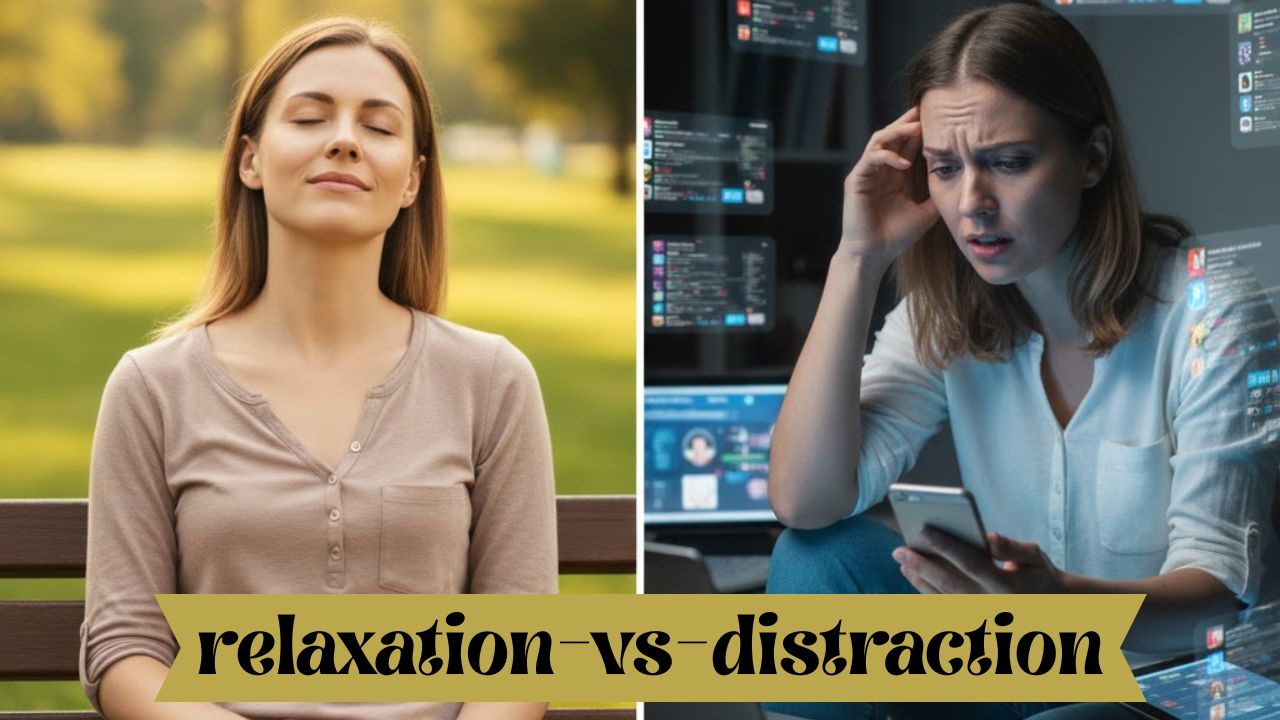
The reason is simple: Distraction and relaxation are fundamentally different states of the nervous system. Understanding this distinction is key to achieving real calm, lowering cortisol, and restoring energy.
 Relaxation vs. Distraction: Neurobiology of Rest and Digital Overload 2" srcset="https://calmingmindtherapy.com/wp-content/uploads/2025/12/relaxation-vs-distraction-1024x576.jpg 1024w, https://calmingmindtherapy.com/wp-content/uploads/2025/12/relaxation-vs-distraction-300x169.jpg 300w, https://calmingmindtherapy.com/wp-content/uploads/2025/12/relaxation-vs-distraction-768x432.jpg 768w, https://calmingmindtherapy.com/wp-content/uploads/2025/12/relaxation-vs-distraction.jpg 1280w" sizes="auto, (max-width: 1024px) 100vw, 1024px" />
What is the Difference Between Relaxation and Distraction?
This Youtube video below from CBT Toolkit explains the difference between relaxation and distraction in cognitive behavioral therapy. It clarifies how each strategy affects emotional regulation and coping. This reference supports choosing the right tool for managing stress and anxiety.
The fundamental difference between relaxation and distraction is the state of the Autonomic Nervous System.
- Relaxation is a physiological shift into the Parasympathetic state (Rest-and-Digest). It activates vagal pathways, lowers cortisol, and releases acetylcholine for calm and focus.
- Distraction is a cognitive diversion that keeps the Sympathetic Nervous System (Fight-or-Flight) in light hyper-arousal. Dopamine-driven attention loops may feel pleasurable, but they do not restore the body.
By the end of a distraction session, the mind may feel “entertained,” but the nervous system remains on edge.
The Neurobiology of Hyper-Arousal: Why Distraction Prevents Recovery
Digital devices, social feeds, and constant notifications hijack attention. Every swipe, like, or notification generates a Dopamine Loop, keeping the brain chasing the next hit. This seeking behavior may feel pleasurable, but it comes at the cost of real physiological restoration.
Mark notices that after scrolling through LinkedIn for an hour, his mind is scattered, his heart rate elevated, and he feels wired rather than restored. The reason lies in Attention Residue, a phenomenon described by psychologist Sophie Leroy. Every time we shift focus, a fragment of attention remains “stuck” on unfinished tasks or consumed content. This residue fragments cognitive resources, preventing the brain from entering the restorative Default Mode Network (DMN) required for deep recovery.
Digital Distraction as Sensory Overload
The brain does not distinguish between work data and social media data; both require active engagement from the Prefrontal Cortex. True relaxation requires downshifting this area to allow neurochemical rebalancing and parasympathetic activation. Without this downshift, Mark’s Sunday leisure never achieves the physiological calm needed to restore energy.
Vagal Tone and Heart Rate Variability: The Science of Measurable Calm
This YouTube video below by Caring Medical & Hauser Neck Center explains heart rate variability and its connection to vagus nerve function. It discusses how nervous system balance affects healing and resilience. This reference supports understanding physiological markers of stress regulation and recovery.
The Vagus Nerve acts as the body’s internal brake pedal. When stimulated, it signals safety to the heart, lungs, and gut, slowing the sympathetic response. Vagal Tone is a measurable indicator of this internal safety signal, and Heart Rate Variability (HRV) is its gold-standard metric.
Distraction suppresses vagal activity, keeping HRV low and “stiff”—a marker of nervous system stress. Relaxation, however, enhances vagal tone, increases HRV, and supports homeostasis. For Mark, walking into a tech-free environment and practicing a focused body scan sends a clear signal to the nervous system: it is safe to restore and recover.
Dopamine vs. Acetylcholine: The Neurochemical Divide
Distraction primarily engages dopamine, the brain’s “seeking” neurotransmitter. Each swipe or click reinforces a cycle of craving, search, and partial satisfaction. Relaxation, conversely, relies on acetylcholine, which promotes calm, focus, and parasympathetic dominance.
The challenge is clear: you cannot reach deep calm while your brain remains in a dopamine loop. Mark’s streaming and scrolling may be pleasurable, but his acetylcholine levels remain low, preventing true nervous system reset.
Three Signs Your “Relaxation” Is Actually Distraction
Even when Mark spends hours “unwinding,” the body may still be in sympathetic overdrive. Watch for these markers:
- Pulse Check: Elevated heart rate despite sedentary activity.
- Transition Irritability: Feeling frustrated when forced to stop digital consumption.
- Morning Fatigue: Waking up wired yet exhausted, a physiological sign of incomplete recovery.
These indicators reveal that passive leisure is often mistaken for true restoration.
How to Turn Distraction into True Relaxation
Active Recovery Techniques
Somatic Shaking: Two to three minutes of rhythmic shaking of limbs and torso releases accumulated adrenaline and provides a subtle dopamine “drip” that engages the nervous system without over-stimulation.
Yoga Nidra: Guided body scans for 20–30 minutes engage parasympathetic pathways and stimulate acetylcholine, supporting neurochemical rebalance.
Physiological Sigh (Huberman Sigh) Protocol: A precise breathing technique that acts as a biological handshake between body and mind.
- Primary Inhale: Deep breath through the nose until lungs feel nearly full.
- Secondary Pop Inhale: Short, sharp inhale to inflate the alveoli fully.
- Extended Exhale: Slow, full exhale through the mouth, longer than the inhale.
Repeated cycles recalibrate the Autonomic Nervous System, signaling a shift from hyper-arousal to homeostasis.
Tech-Fast Protocol
Designate a Digital Sunset one hour before sleep. Mark avoids screens, social feeds, and notifications, reducing cognitive load and giving the nervous system time to downshift into parasympathetic dominance.
Why We Scroll Before Bed: Revenge Bedtime Procrastination
Late-night digital habits are often a response to Revenge Bedtime Procrastination—an attempt to reclaim control in a day dominated by work or obligations. Unfortunately, this spikes cortisol, disrupts sleep architecture, and prevents HRV improvements. Awareness of this pattern is critical for achieving genuine rest.
The 60-Second Digital Sunset: Pro-Tip Sidebar
Step away from all devices. Focus on three breaths, stretch shoulders, and roll wrists. This micro-practice primes vagal activation and provides a quick nervous system reset, ideal for high-energy or ADHD-brain types who feel “too wired to relax.”
Decision Matrix: Selecting the Right Recovery Strategy
| Feeling State | Recommended Technique | Time-to-Calm |
|---|---|---|
| Vibrating / Anxious | Somatic Shaking | 2–3 min |
| Brain-Dead / Foggy | Tech-Fast (No Screens) | 15–20 min |
| Heart-Racing / Stressed | Physiological Sigh | 2-4 cycles |
This simple matrix helps high-performers like Mark choose the most efficient path to nervous system restoration.
The Path to Homeostasis: Prioritizing Restoration Over Digital Escape
True relaxation is intentional, measurable, and neurobiologically grounded. By engaging the vagus nerve, metabolizing cortisol, and enhancing acetylcholine signaling, the body can recover, rejuvenate, and restore HRV. Passive distraction may feel satisfying, but it leaves the Autonomic Nervous System in hyper-arousal, perpetuating the “wired but tired” cycle.
Mark learned that setting boundaries, practicing physiological sighs, and brief tech-free windows allow his nervous system to reset. The result: genuine calm, improved sleep, and sustainable energy.
Expert Insight: Distraction is an escape from your life; relaxation is a return to your body.
Tonight, replace 15 minutes of scrolling with a structured Physiological Sigh or Somatic Shaking. Track how your body responds, and notice the difference in energy and calm tomorrow morning.