

Mindful Awareness vs. Mindful Thinking: Stop Overthinking and Start Observing
Introduction: Mindful Awareness vs. Mindful Thinking
If you’ve ever sat down to meditate and caught yourself thinking, “Am I doing this right? Am I breathing correctly?”, you aren’t failing—you’re experiencing Mindful Thinking, not Mindful Awareness. While these modes may seem similar, they involve fundamentally different cognitive and neural processes. Understanding this distinction is key for overthinkers stuck in mental loops, ready to move from analyzing life to fully experiencing it.
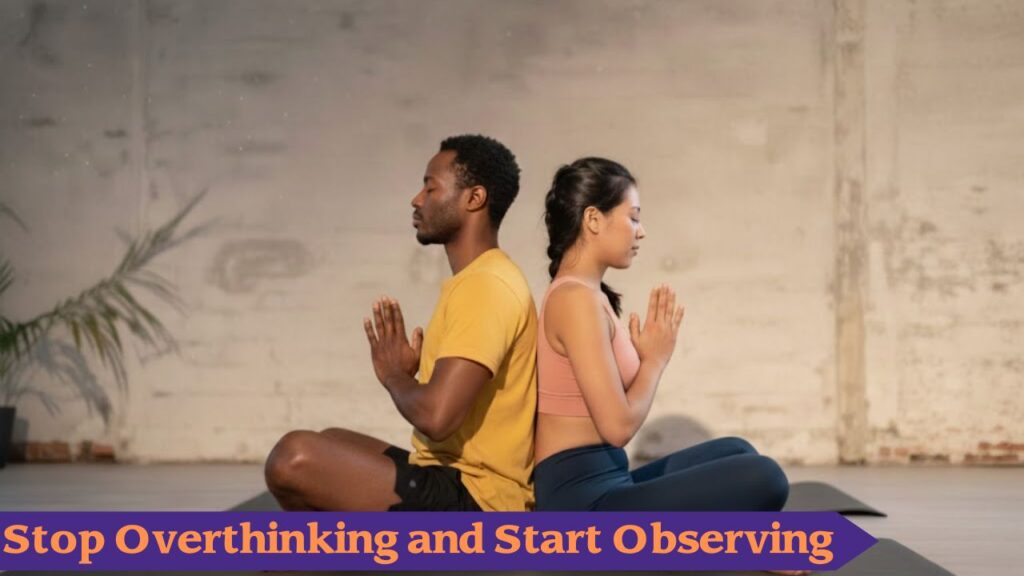
What Is Mindful Awareness vs. Mindful Thinking?
This YouTube video below by the Veterans Health Administration introduces mindful awareness and its role in observing thoughts and emotions without judgment. It highlights techniques for staying present. This reference supports developing focus, clarity, and emotional regulation.
Mindful thinking is a conceptual process where the mind analyzes or labels the present experience, whereas mindful awareness is a non-conceptual state of direct, sensory witness. While thinking occurs within the mind, awareness is the “space” or “container” in which those thoughts exist.
Mindful thinking relies on intellect, seeking to interpret, judge, or control sensations and emotions. Mindful awareness, by contrast, simply observes—sounds, bodily sensations, and feelings arise and pass without evaluation. Thinking can feel productive, but it often traps practitioners in loops of rumination. Awareness allows you to disengage these loops, giving the Task-Positive Network (TPN) and Insula a chance to anchor attention in interoceptive awareness, the ability to sense internal bodily signals like heartbeat, breath, or visceral tension without cognitive overlay.
The Science of Two Networks
The human brain operates with overlapping but distinct networks that explain why thinking and awareness feel so different.
Default Mode Network (DMN): Mindful thinking activates the DMN, including the Posterior Cingulate Cortex (PCC). This network generates self-referential narratives—the “story of me”—and is heavily engaged during rumination and meta-cognitive loops. Even during “mindful thinking,” this network keeps you entangled in internal commentary.
Task-Positive Network (TPN): Mindful awareness recruits the TPN, with activation of the Insula, which bridges interoceptive awareness. Here, you sense internal signals directly, without the mind’s storytelling filter. By shifting activation from DMN to TPN, awareness allows bottom-up processing of sensory and emotional input, bypassing overactive cognitive control and reducing stress.
While these modes seem similar, they represent a shift in neural processing: from top-down analysis (thinking) to bottom-up witnessing (awareness).
Subject-Object Shift: Cognitive Defusion in Action
A core mechanism in mindfulness is the Subject-Object Shift, also called Cognitive Defusion in ACT (Acceptance and Commitment Therapy). When thinking, you are the thought—fully immersed in the narrative. In awareness, the thought becomes an object you observe without judgment.
This shift is essential: it disengages the mind from rumination, reduces emotional reactivity, and strengthens psychological flexibility. Cognitive defusion allows practitioners to witness thoughts as transient phenomena rather than truths, creating a safe distance between mind and experience.
Intellectualization as a Defense Mechanism
Overthinkers often confuse mindful thinking with awareness because it feels safer. This intellectualization is a form of experiential avoidance, where analyzing sensations allows one to avoid feeling them directly. For instance, noting “My heart is racing, I am anxious” without actually sensing the experience may feel mindful but doesn’t cultivate true presence.
While understanding these mechanics is helpful, the true shift occurs when we stop measuring mindfulness by how “calm” we feel and start measuring it by how “aware” we are.
Key Distinctions Between Mindful Thinking and Mindful Awareness
| Feature | Mindful Thinking | Mindful Awareness |
|---|---|---|
| Cognitive Mode | Conceptual / Analytical | Sensory / Experiential |
| Language | Internal labels (“I am calm”) | Beyond words (The feeling of calm) |
| Primary Tool | Intellect | Senses / Presence |
| Goal | To understand or manage the moment | To witness the moment as it is |
| Effort Level | Active, striving | Receptive, effortless |
| Nervous System State | Sympathetic activation (fight or flight) | Parasympathetic engagement (rest & digest / safety) |
Notice that awareness reduces effort and aligns the nervous system for rest, whereas thinking maintains activation and mental strain.
Practical Techniques to Shift from Thinking to Awareness
The objective is to disengage the DMN loops, engage TPN and Insula, and cultivate direct experience.
The Mirror Metaphor: To understand awareness, imagine a mirror. Mindful thinking obsesses over the reflections—the colors, shapes, and movements. Mindful awareness is being the mirror itself, still and non-reactive, capable of holding any reflection without trying to change it. This embodies Non-Striving, a pillar of MBSR, emphasizing presence without effort.
Body Sensing: Shift from thinking about sensations to feeling them directly—tingling in the foot, pressure in the shoulders, or warmth in the hands. This anchors awareness in raw experience.
The “Gap” Practice: Create a brief pause before a thought arises. This micro-gap allows the nervous system to settle and TPN activation to support interoceptive awareness.
Step-by-Step Guide: How to Shift to Mindful Awareness
- Label the mental commentary currently running (e.g., “Thinking”).
- Redirect focus to a raw, non-verbal physical sensation (heartbeat, breath, body pressure).
- Drop the internal description or naming of the sensation; just experience it.
- Observe the silence between thoughts—the “Gap” where awareness emerges.
- Rest in the role of the witness, not the doer; let awareness hold experience without intervention.
Following this sequence strengthens bottom-up regulation, allowing the Insula and TPN to calm DMN-driven loops.
Last Words
Mindful awareness is not about doing or fixing—it’s about observing without interference. Next time you notice a thought or feeling, pause, feel it, and rest as the witness. This small shift from thinking to awareness is the key to lasting calm and presence.